The Benefits of using a Maternity Support Belt during Pregnancy
Pregnancy is one of the most exciting times in your life, but it also brings a lot of change — shifts in posture, hormone levels, and a steadily increasing load on your pelvis. One of the most common results is pelvic girdle pain (PGP) or lower back pain, something many mums experience during pregnancy, sometimes severely. A maternity support belt is one simple, non-invasive option designed to help.
What even is a pregnancy support belt?
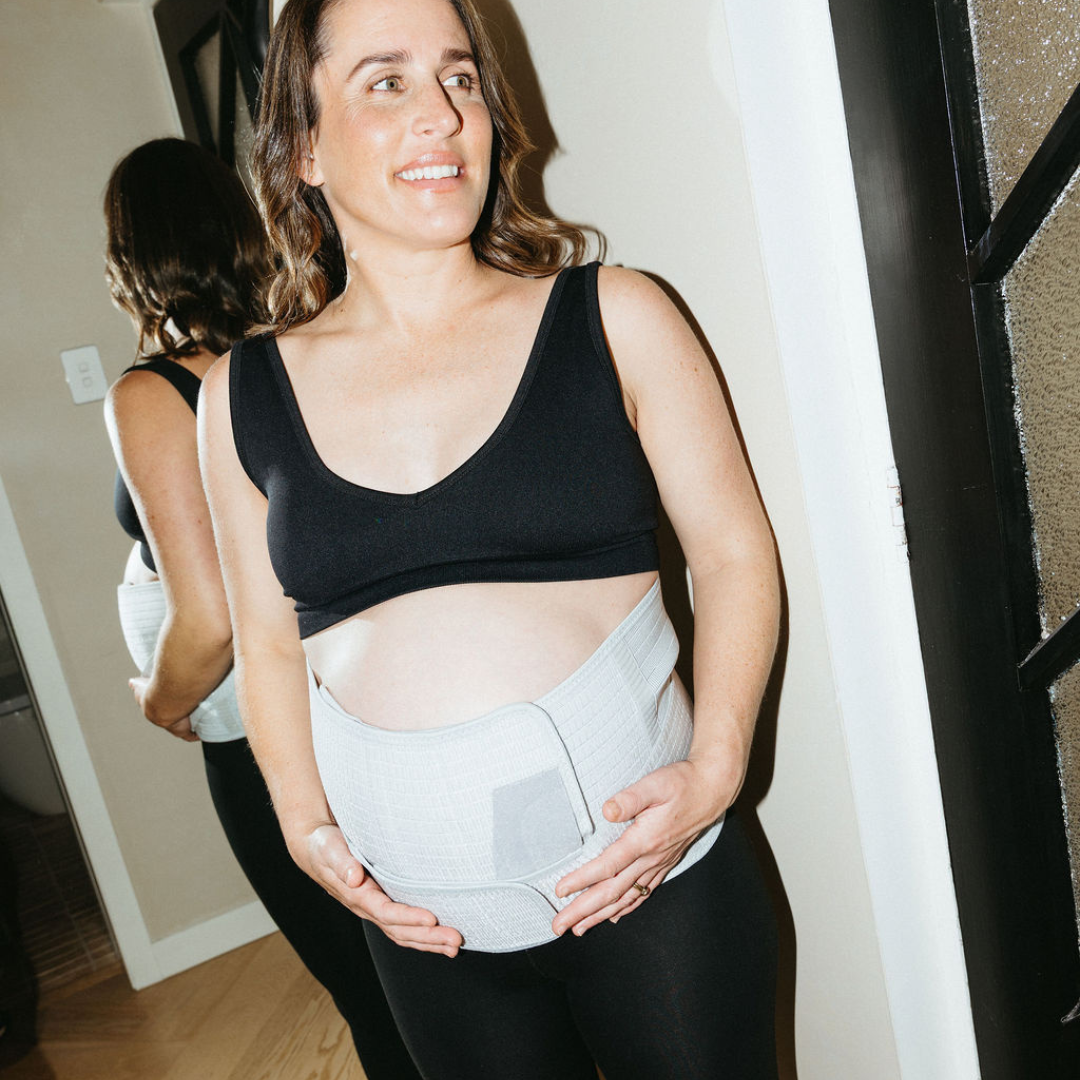
A pregnancy or maternity support belt is a garment worn around the lower abdomen and hips during pregnancy to support your growing belly and relieve strain on your lower back, pelvis, and hips. It works by gently lifting and redistributing the weight of your bump, stabilising the pelvic joints, and improving posture — which can ease common discomforts like pelvic girdle pain, lower back pain, and that feeling of heaviness. Typically made from elastic or adjustable materials, maternity belts are flexible, lightweight bands that can be worn comfortably under clothing and adjusted as your pregnancy progresses.
Main Squeeze, our pregnancy and postpartum support belt, is a lightweight, flexible band that can be easily adjusted throughout your pregnancy to give support where you need it most. With two layers of fabric, Main Squeeze can be tightened and wrapped under your belly as needed to provide extra support as your belly grows and changes.
What is pelvic girdle and lower back pain in pregnancy?
- Pelvic girdle pain (PGP) refers to pain in the pelvic region, often affecting the sacroiliac joints or the pubic symphysis.
- Lower back pain often goes hand in hand with PGP.
- These pains can affect walking, standing, turning in bed, and many everyday activities.
- Causes include hormonal changes (increased relaxin), increased weight and abdominal size, altered posture as your centre of gravity shifts, and sometimes laxity or instability of the pelvic joints and ligaments.
Do maternity belts actually work? What the research says
Research into maternity belts is still relatively limited and results vary between studies, but clinical trials, reviews, and systematic reviews point to several consistent benefits:
- Pain reduction. Many studies report a decrease in self-reported pain across the lower back, pelvic girdle, and pubic symphysis.
- Improved function in daily activities. Tasks like walking, standing, turning, and getting out of bed tend to become easier.
- Better pelvic stability. Decreased sacroiliac joint laxity, better positional sense, and less undue motion of the pelvic joints.
- Improved mobility and balance. Some evidence that belts help with stability, reducing the risk of falls or feelings of instability.
- Better comfort and adherence with flexible designs. Flexible or adjustable belts seem to be better tolerated — and if a belt is uncomfortable, people won't wear it often enough to feel the benefit.
- Non-invasive and low risk. Compared with medications or other interventions, belts are low risk, can be used at home, and are relatively inexpensive.
"Flexible belts, or belts that adjust, seem to have better tolerance. If a belt is uncomfortable, people won't use it sufficiently."
How to get the most out of your maternity belt
- Get fitting advice, ideally from a physiotherapist or women's health specialist. Correct belt position makes all the difference to how well it works.
- Wear it when your pain is worst — standing for long periods, walking, getting in and out of the car, or lifting other children.
- Don't rely on it entirely. Combine belt use with posture awareness, pelvic and core stabilising exercises, and changing position frequently. A pre/postnatal exercise specialist or pelvic physiotherapist can guide you on the best exercises for your symptoms.
- Limit how long you wear it so it supports you without overly restricting natural movement or weakening your muscles.
- Adjust as your pregnancy progresses. What works at 20 weeks may need tweaking at 30+ weeks as your size and symptoms change.
- Monitor comfort and skin. If your belt feels too tight or causes any discomfort, stop using it.
Is a maternity belt right for you?
Maternity support belts are not a magic fix, but the research suggests they are a useful tool in many cases of pelvic pain during pregnancy.
A maternity support belt can help reduce pain, improve function, stabilise your pelvic joints, and help you maintain mobility and comfort during pregnancy — especially when used correctly and combined with other supports like exercise, posture care, and rest.
If you're experiencing pelvic or lower back pain in pregnancy, it's a good idea to talk with a health professional — your midwife, lead maternity carer, or physiotherapist — about whether a belt might help in your specific case.
Other products that may help with pelvic or lower back pain in pregnancy include a good pregnancy pillow that supports your hips, knees, and back, and a magnesium body rub to massage directly into aching muscles. You can also find the belt and pillow together in our Pregnancy Duo.
Frequently asked questions
When should I start wearing a pregnancy support belt?
There's no fixed rule — most mums start when they first notice pelvic or lower back discomfort, which is often in the second trimester as the bump grows. If you've had pelvic girdle pain in a previous pregnancy, you may want to start earlier.
How long can I wear a maternity belt each day?
Belts are best used in shorter stretches during the activities that aggravate your pain, rather than worn all day. This gives you support without over-relying on it or restricting your natural movement. Your midwife or physiotherapist can advise on what's right for you.
Can I wear a pregnancy support belt after birth?
Some belts, including Main Squeeze, are designed for both pregnancy and postpartum use to support recovery. Check with your lead maternity carer about the right time to start after birth, particularly if you've had a caesarean.
Will a maternity belt hurt my baby?
A correctly fitted belt sits under the bump and supports its weight rather than compressing it, so it shouldn't be uncomfortable for you or your baby. If your belt feels tight, restrictive, or painful, loosen it or stop wearing it and get fitting advice.

Anna Barlow



Leave a comment
This site is protected by hCaptcha and the hCaptcha Privacy Policy and Terms of Service apply.