
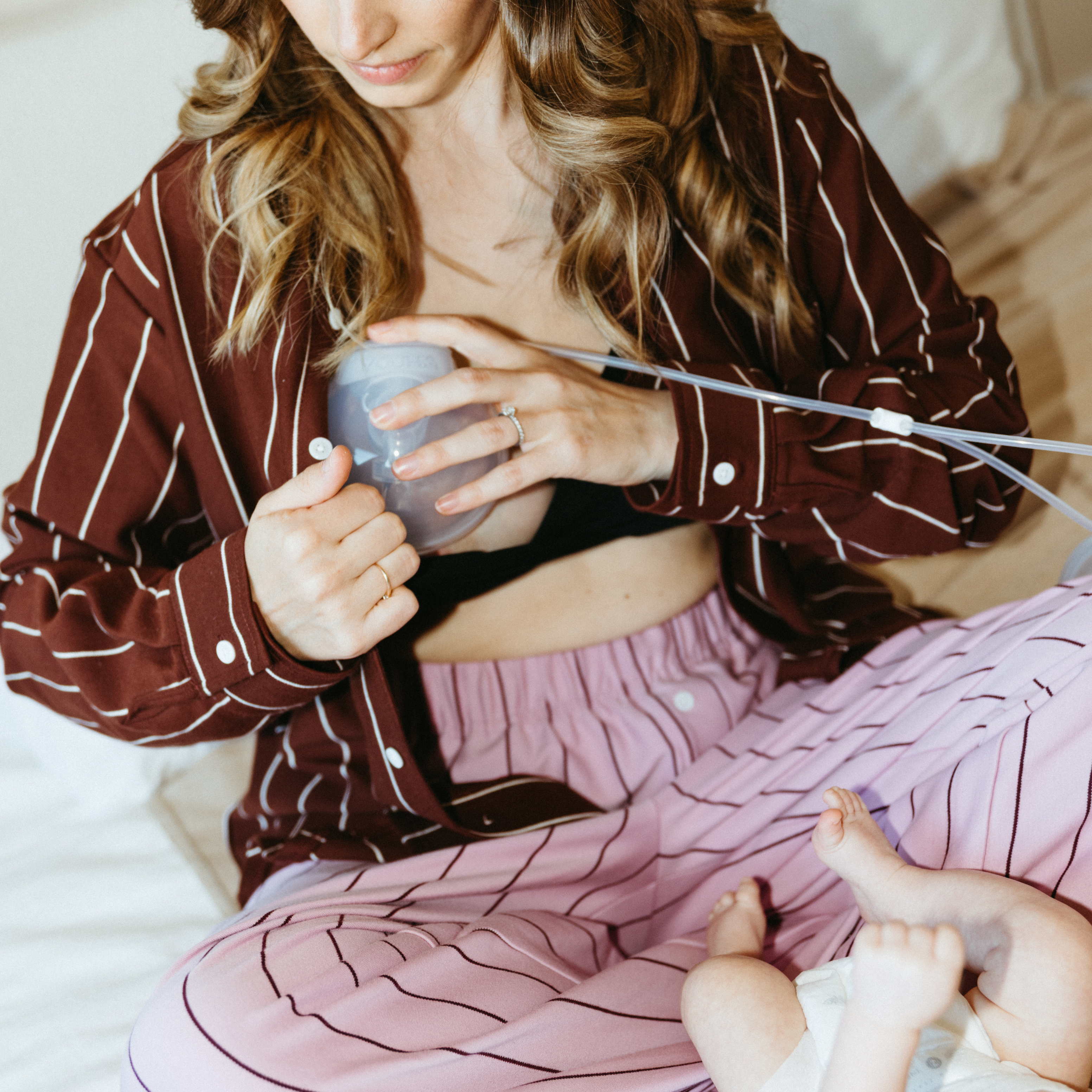
How to Measure Your Nipple for the Perfect Flange Fit
Getting a good latch isn't just for breastfeeding — it matters just as much when you're pumping. And one of the biggest game-changers for comfort and milk output? Making sure your flange actually fits.
If you've ever experienced soreness, rubbing, or just a feeling that something isn't quite right while pumping, there's a good chance your flange size is off. The good news is that measuring for the right fit is simple, and we're going to walk you through it step by step.
What Is a Flange (and Why Does Size Matter)?
The flange is the funnel-shaped piece that sits against your breast and draws your nipple into the tunnel during pumping. It might look like a one-size-fits-all situation, but nipples vary widely — and pumping with the wrong size can mean pain, reduced milk flow, and even damage to delicate tissue over time.
The goal is a tunnel that allows your nipple to move freely without rubbing against the sides, while also not pulling in too much of the surrounding areola. That sweet spot is where comfort and efficiency live.
Before You Measure: One Important Step
Here's something a lot of people don't realise — your nipple changes size when stimulated. This means measuring while relaxed won't give you an accurate reading.
Before you take any measurements, gently stimulate your nipple until it's fully extended, just as it would be during pumping. This will give you the most accurate size to work with.
Also worth noting: your left and right nipples may be different sizes. It's more common than you'd think, so measure each one individually and choose a flange for each side accordingly.
How to Measure Your Nipple
There are two easy methods you can use — pick whichever feels most accessible to you.
Method 1: Using a Ruler or Tape Measure
- Stimulate your nipple to full extension.
- Hold a ruler flat against your breast, with the 0 mark aligned with one edge of your nipple.
- Read the measurement at the opposite edge of your nipple — in millimetres.
- That number is your nipple diameter.
Note: this measures the width of your nipple shaft only, not the surrounding areola, you don't want to measure the areola, only the nipple width.
Method 2: Using a Circular Sizing Guide
If you have access to a printed or digital circular guide (the kind often included with breast pumps or available to download), this method can be even more intuitive.
- Stimulate your nipple to full extension.
- Place your nipple into the circles, starting with the smallest that looks close to your size.
- Find the smallest circle where your entire nipple sits comfortably inside, right up to where the nipple meets the areolar tissue — but not squeezing.
- The number printed on that circle is your nipple diameter in millimetres.
Choosing Your Flange Size
Once you have your nipple measurement, you'll use it to find the right flange — but it's not a direct match. Your flange size should be a few millimetres larger than your nipple diameter to allow comfortable movement during pumping.
Youha Flange Sizes
Youha breast pumps come with a range of flange options to accommodate different body types:
The ONE Double Electric Breast Pump is compatible with flange sizes of 21mm, 24mm, 27mm, and 30mm (available as silicone cushions or breast shields).
The INs and INs GEN 2 come with a 24mm breast shield, and there are 28mm shields plus flange inserts ranging from 13mm to 26mm available for a more customised fit.
The Evera comes with 21mm & 24mm breast shields + 17mm & 19mm flange inserts included, with 27mm shields plus 15mm flange inserts available separately for a more customised fit.
Not Sure Which Size to Choose?
If you're between two sizes, sizing down usually gives a better seal. It might feel counterintuitive, but a slightly snugger fit tends to be more effective than going too large.
Signs Your Flange Fits Well
A well-fitting flange should feel comfortable from the start of your pumping session to the end. Here are a few signs you've got the right size:
- Your nipple moves freely in the tunnel without rubbing the sides
- Only a small amount (or none) of your areola is being pulled into the tunnel
- There's no pinching, pain, or white marks on your nipple after pumping
- Your milk flows well and your breasts feel properly drained
Signs You Might Need a Different Size
It's worth reassessing your flange size if you notice:
- Nipple rubbing or soreness during or after pumping
- A lot of areola being pulled into the tunnel
- Your nipple moving to the side rather than straight into the centre
- Reduced milk output without an obvious reason
If things don't feel right, don't push through, small adjustments to flange size can make a surprisingly big difference. Your nipple size can change as your breastfeeding journey progresses, so re-measuring is a good idea if you're noticing changes in comfort or milk output.
Getting the Most from Your Youha Pump
The Youha range is designed with fit and comfort in mind, and the variety of flange sizes available means most people can find a great match. If you're unsure about your sizing or want personalised guidance, reach out to our team — we're here to help.
You can find our full range of Youha breast pumps and accessories, including additional flanges and inserts, here.
Every body is different, and finding your perfect pump setup can take a little trial and adjustment. Be patient with yourself — you're doing an amazing job.

Anna Barlow



Leave a comment
This site is protected by hCaptcha and the hCaptcha Privacy Policy and Terms of Service apply.